Exiperiments, Failures, and Success

I Love Building Things.

I’ve always been curious about trying new ideas. Since the beginning of my career, I’ve experimented with several projects—some failed quickly, some became successful businesses, and each one taught me lessons that shaped my career.

Here are some of the most memorable ones.

1. Revolt Press (My First Major Success)

Back in 2013–14, as right-wing politics was gaining momentum across democracies—from the United States to India—a few university friends and I saw an opportunity to build a digital media platform dedicated to readers interested in conservative viewpoints.

We launched RevoltPress.com (global) and RevoltPress.in (India).

This was my very first startup, and to our surprise, it attracted a large audience within a relatively short time. More importantly, it introduced me to web development, digital publishing, and SEO for the first time.

Looking back, I owe a lot to the countless tech creators on YouTube who freely shared their knowledge. Their tutorials played a huge role in shaping my career in technology.

After nearly two successful years, however, the founding team decided to part ways. Like many early-stage startups, the project eventually shut down—not because of a lack of users, but because the founders could no longer move in the same direction.

Although the company ended, my journey into SEO had only just begun.

2. Easo Money (My First Reality Check)

Around 2016, I became fascinated by personal finance blogs.

Many YouTubers were talking about bloggers earning significant passive income by publishing content around making money online and financial independence. It looked exciting, and I wanted to see if I could do the same.

Confident in my growing SEO skills, I launched EasoMoney.com.

I built the website from scratch, optimized it for search engines, and created social media pages to promote every article. Back then, Facebook pages and groups were one of the biggest traffic sources for publishers. Many successful websites depended heavily on them.

I believed social media would become the engine that drove my traffic.

Instead, Facebook permanently suspended my page for what it considered spam. In reality, I was simply sharing 10–20 article links each day—something that was common practice at the time.

Without Facebook traffic, my organic search traffic wasn’t enough to generate meaningful revenue. After about five months, I decided to shut the project down.

That experience taught me one of the most valuable lessons of my career:

Never build a business that depends entirely on someone else’s platform.

A perfect example was WittyFeed. At its peak, it was one of the largest content publishers in India, generating millions in monthly revenue while relying heavily on Facebook traffic. When Facebook changed its policies and removed their pages, the company lost the majority of its audience almost overnight.

Watching that happen reinforced the importance of owning your distribution channels instead of depending on a single platform.

3. East Hour (My First Sustainable Online Business)

After graduating from university, I wanted to build something much bigger.

While researching technology websites, I noticed a gap in English-language tech news covering East and Southeast Asia. Most major publications focused on the US, Europe, or India, while countries such as Thailand, Malaysia, Vietnam, Cambodia, and Indonesia received relatively little English coverage.

That insight led me to launch East Hour.

The website covered smartphones, laptops, consumer technology, gadgets, and regional tech news with a focus on East and Southeast Asia.

Within a few months, the site gained a loyal audience and started generating consistent revenue through Google AdSense and sponsored partnerships.

At its peak, the business produced an average monthly recurring revenue (MRR) of around $2,500.

More importantly, East Hour taught me how to build an editorial operation, grow search traffic consistently, monetize content, and run an online media business beyond just SEO.

4. Telegaon (The Project I’m Most Proud Of)

While working in Dubai, cryptocurrency was entering one of its biggest bull markets.

Although I had been investing in crypto since 2018, I had never seriously considered building a business around it.

One weekend, I decided to experiment.

I launched Telegaon, built the website myself, implemented the technical SEO, and searched for a niche with less competition.

Instead of competing with hundreds of websites publishing crypto news, I focused on a specific segment: cryptocurrency price predictions and forecasts.

The strategy worked.

Within just a week of launching, Google had already started indexing the website and showing impressions. While there were still no clicks, seeing impressions appear so quickly convinced me that I was onto something.

Most new websites take weeks—or even months—to gain meaningful visibility in search results. Telegaon started showing promising signals much earlier, giving me the confidence to invest more time into the project.

Over the following years, Telegaon grew into a globally recognized crypto publication.

Its research and forecasts have been referenced by financial media outlets around the world in more than eight languages, and the website has readers from over 150 countries.

At its peak, the business became an incredibly successful venture. It allowed me to build a team, scale operations, and collaborate with some of the biggest names in the cryptocurrency industry.

More than the revenue, Telegaon proved something important to me:

Finding an underserved niche and executing consistently is often more valuable than competing in crowded markets.

What These Projects Taught Me

Looking back, none of these projects were wasted efforts—even the ones that failed.

Revolt Press introduced me to web development and SEO.
Easo Money taught me the danger of relying on third-party platforms.
East Hour showed me how to build a sustainable digital media business.
Telegaon proved that identifying the right niche can outperform trying to compete with everyone else.

Every project taught me something new, and together they shaped the way I approach product building, SEO, digital publishing, and online businesses today.
Posted in Essays | Comments Off on Exiperiments, Failures, and Success

How ChatGPT Ranks and Cites Websites?

How ChatGPT Ranks Websites: GEO & LLM SEO Strategies for 2026

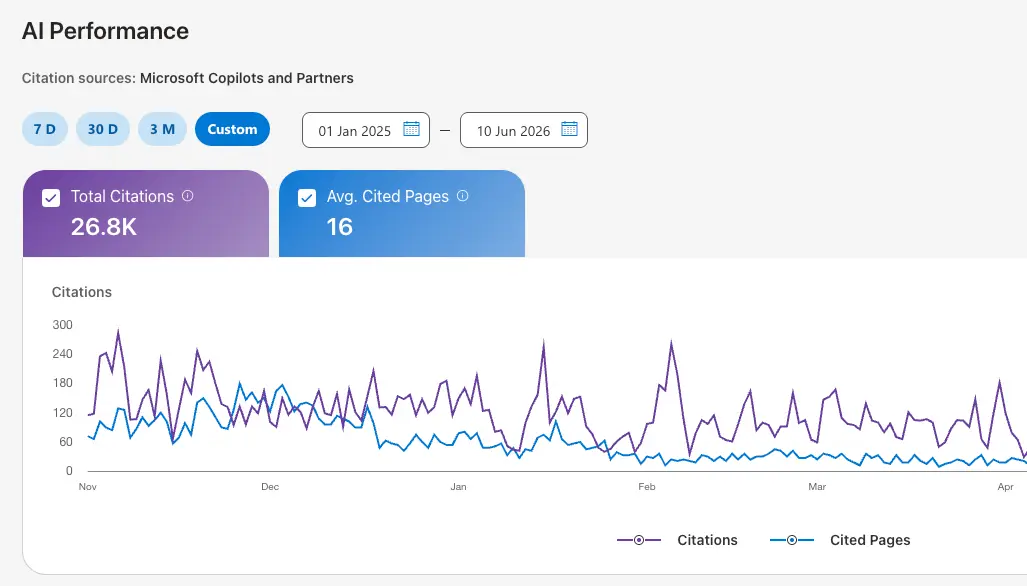
My website usually receives an average of 16 AI citations per day from LLMs. Between 2025 and 2026, it was mentioned 26.8K times by LLMs, including ChatGPT, Microsoft Copilot, Qwen, Claude, Mistral, and Perplexity.

A lot of website owners are curious about how to make sure their website gets good rankings in ChatGPT.

Unlike Google that shows blue link lists with rankings of websites, ChatGPT does not show rankings of sites; it has knowledge about what it has been trained on, and then will find appropriate answers from reputable websites on the Internet (currently in real-time).

This means that writing a lot of articles that are full of keywords, or constructing a lot of bad content does not really help you. Instead, the type of content that LLMs prefer is written with clear, accurate, helpful, and appropriate (relevant), according to their level of expertise.

If you want your website to rank, I recommend that you establish yourself as an expert in your category. Create content that goes deep and only covers one specific topic. Have strong pillar pages, answer all common questions that are related to your niche, offer many real-world examples, and keep your content updated.

Google has released a new guide about the LLMs and GEO optimization. According to Google, following strong foundational SEO best practices remains the most effective way to increase your chances of being cited and discovered by LLMs and generative AI search.

A website that has a good internal linking system, is well organized, and provides original content is more valuable than if you have created (5000) 5000-thin pages.

Telegaon in LLMs

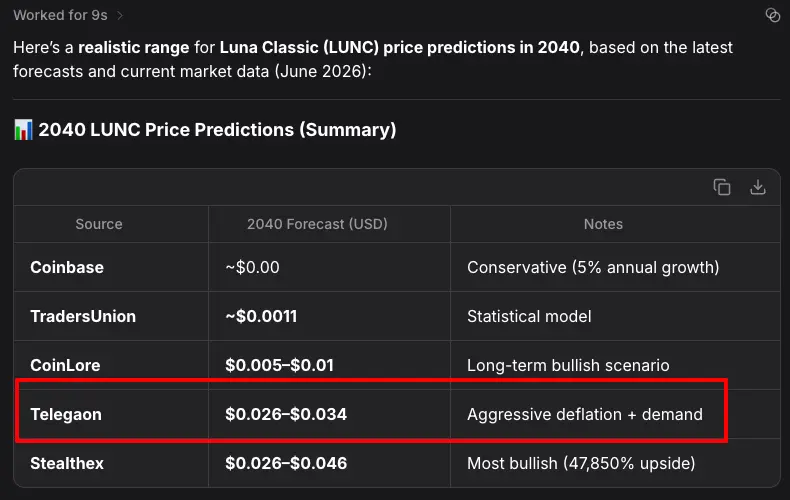
LLMs in action: Telegaon constantly gets citations from LLMs simply because it has strong authority in cryptocurrency price forecasts.

Nonetheless, technical SEO continues to be of major importance. By improving page load times, design optimizing for mobile devices, creating appropriate titles to assist crawlability (indexability) and incor porating structured data/code markups (Schema) and FAQ/brief descriptions will help improve both Search Engines and AI’s ability to learn about your site’s content.

The lack of clarity is a strong deterrent to creating valuable and meaningful content. The majority of website owners do not understand or care about technical requirements as they believe that having amazing content will guarantee success in ChatGPT.

Unfortunately, this is simply not true; there are no soft factors when establishing authority or reputation. Therefore, the rule applies “No Quality No Success”.

When businesses make investments in GEO (generative engine optimization), the objective ought to be that the content created is something an AI assistant could safely cite as a source.

Establishing yourself as a reputable authority through original data or research, producing case studies, demonstrating ability with “how-to” tutorials, developing comparison guides or giving expert opinions are exceptional ways to improve your reliability as a source of information.

Creating a brand that is known to consumers and earning links back from other well-respected sites to your site will also help increase reliability and trustworthiness.

In summary, being successful during this time of AI has far less to do with chasing the latest algorithms than it does with providing true value.

If a website has created something that solves an actual problem for people, provides an individual an ability to demonstrate their expertise, and organizes its content so that it can be easily navigated by them; this is the type of website that search engines and modern-day AI assistants are more likely to find and refer users to.

Posted in Essays | Comments Off on How ChatGPT Ranks and Cites Websites?

SEO vs GEO: What is the Difference?

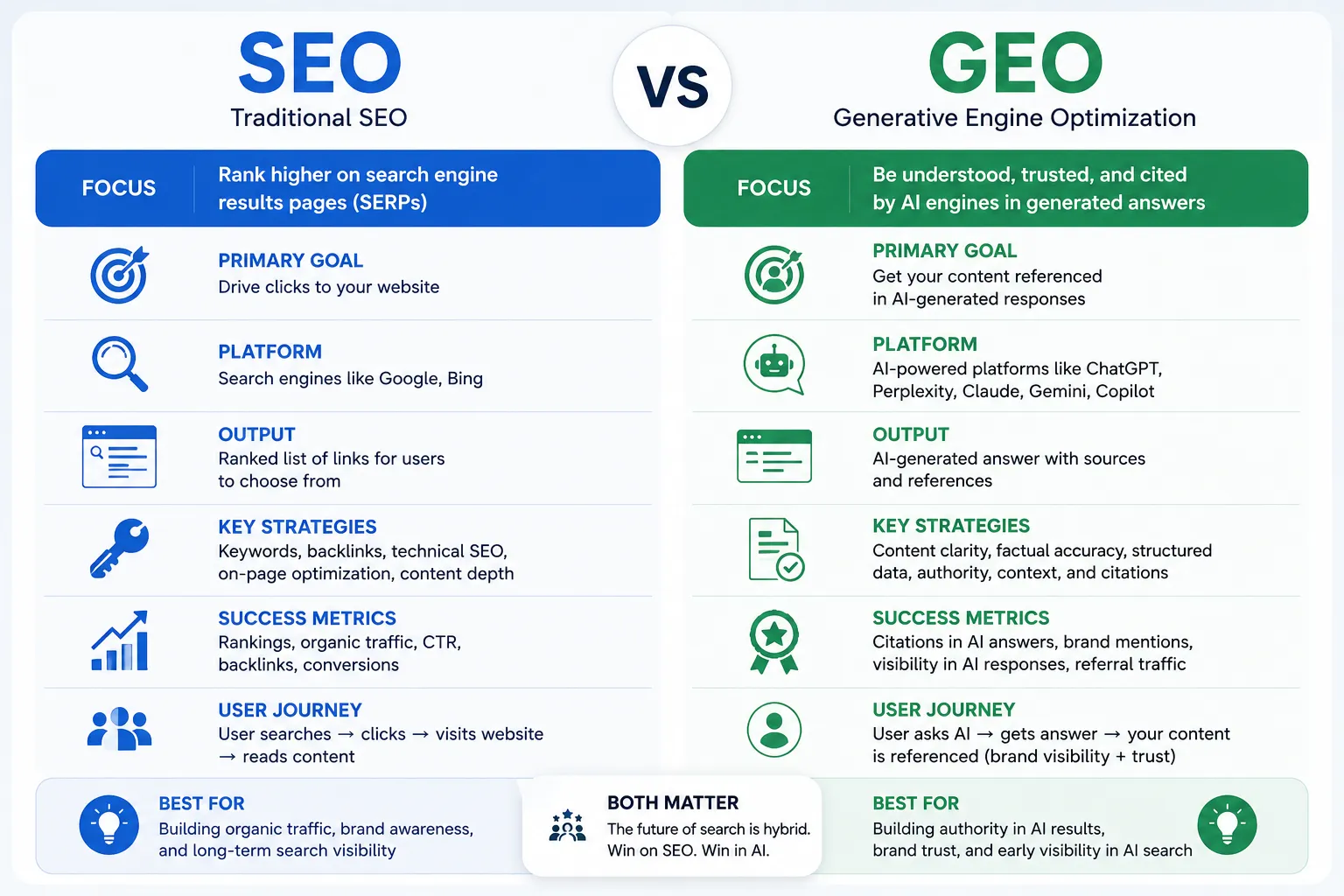
SEO vs GEO

TL;DR: While SEO helps your website rank on search engines, GEO helps your content get understood, cited, and surfaced by AI-powered search and generative engines.

Search has evolved over the last several years; whereas previously it was simply a matter of ranking well enough to be listed on the first page of Google so that people would click your link.

Today, many users simply ask their digital assistant for an answer rather than even going through the process of a traditional keyword search (i.e. “open the google search page, type in what I am looking for, and hit enter”).

This has led to the emergence of an entirely new concept in the world of search engine optimization called Generative Engine Optimization (GEO).

There may look like similarities between traditional SEO and GEO because both involve creating high-quality content that provides value. However, they are created for different reasons.

The main goal of Traditional SEO is to improve your visibility in search results. By optimizing page speed, keyword targeting, obtaining backlinks and structuring your site in such a way that it’s easy for search engines to crawl/index your site, you’ll have accomplished all of these goals.

As long as everything goes smoothly, your site will continue moving up the search results until you get enough traffic to justify spending money on paid advertising.

On the other hand, when considering GEO, rather than asking yourself “What can I do to get my site to rank #1,” you would instead ask “What do I have to do for AI systems to trust me enough to use me as a source of data/answers.”

Therefore, instead of focusing solely on driving traffic to your site, you would build a foundation of accurate and trustworthy data arranged in a clear and concise manner so that AI systems can easily generate their own responses based on it.

Suppose someone types “How to stake” into the search bar. When you optimize for SEO, you’ll want to position your article as one of the top results. If you’re using GEO, you’d like your AI assistant to provide a summary of your explanation or use some of your information when answering the question.

This means that writing clearly and concisely is going to be absolutely critical. Content that gives direct answers to the user’s question, clearly describes the concept, and doesn’t include a bunch of fluff is going to be easier for an AI model and also easier for a human reader to understand.

The use of credible facts, logical organization, and regular updating also play a significant role in successfully ranking your site.

However, GEO is not a replacement for SEO. As always, having a well-built website, fast loading, and good internal links continues to be part of the overall visibility equation.

GEO builds upon that foundation but is evolving the same principles of SEO into a world with AI-based search engines.

The best approach is to think about how your content can help the people using your site rather than just focusing on a number assigned to a computer program.

If your content is high-quality, provides clear directions, and is supported by reliable sources, it will have a better chance of obtaining high rankings both through traditional SEARCH engines and also in AI-generated environments.

To stay ahead of the curve as search evolves, businesses and publishers who integrate great SEO with GEO friendly content will have an advantage going forward.

The objective is not simply generating a click; it also involves becoming a credible source of information no matter which option the user selects when using a search engine.

Posted in Essays | Comments Off on SEO vs GEO: What is the Difference?

How to Check Your Website’s AI Citations?

In this article, I will explain how to check a website’s citations & traffic from AI. As AI (artificial intelligence)-powered search engines and assistants (like ChatGPT, Google AI Overviews, Gemini, Perplexity and Copilot) become more common, website owners are beginning to ask, “How do I know if my site is receiving traffic or citation from AI?”

Fortunately, many tools are available today to help provide information about your AI visibility.

1. Google Analytics 4 – Check For AI Traffic

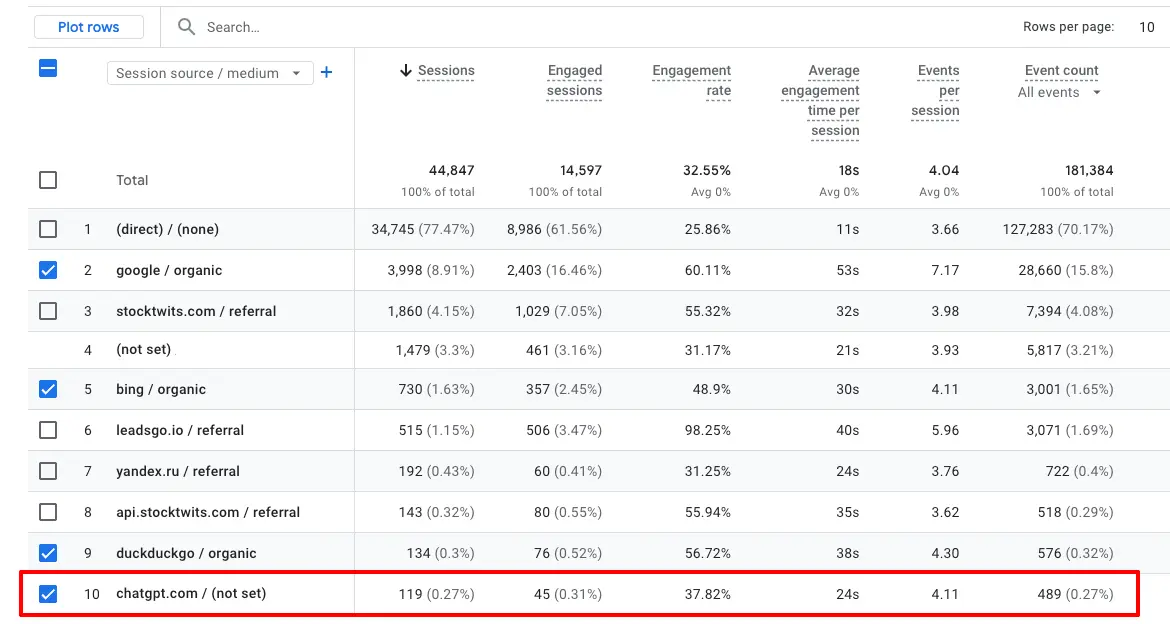
Chatgpt performance Telegaon

Here’s how you can check your website traffic from LLMs like ChatGPT in Google Analytics GA4.

Google Analytics 4 (GA4) provides one of the simplest ways to measure traffic from AI users.

Follow the steps below to find your AI traffic in GA4:

Go to Reports → Acquisition → Traffic Acquisition.

When looking at your referrers, you can see if there have been any visits from an AI source or AI search experience.

To make it easier to track these visits, create a custom report or filter that includes referrals from the following sources:

ChatGPT, Perplexity, Gemini, Copilot, Claude, and other AI assistant sources

By viewing these referrals over time you will be able to see how much traffic AI sites send to your website and what pages receive the most engagement from these visitors.

2. Bing Webmaster Tools – AI Citations Tracking

How ChatGPT Ranks Websites: GEO & LLM SEO Strategies for 2026

Here’s how you can use Bing Webmaster to track citations from LLMs.

Bing Webmaster Tools is another great option if you are serious about Generative Engine Optimization (GEO).

Reportedly Microsoft has now created a reporting framework which enables webmasters to gain insight into how various forms of content have been surfaced and cited in Bing’s artificially intelligence-driven offerings.

These reports derive value from showing the following data points:

  • AI citations
  • AI-generated impressions
  • Clicks from an AI output
  • Content performance in Bing’s generative search engine.

For many content publishers at present, these reports represent clear visibility into a website’s performance in the context of AI reference.

3. Manually Attempt to Reference an LLM

Use various AI tools specific to your niche, and pose questions to them to find whether or not any references to your website exist. A few examples of what you might ask include:

  • What is programmatic SEO?
  • Where are the best cryptocurrency exchanges located in India?
  • What should I do to optimize for geo?

If your content is viewed as authoritative and pertinent, you could have a reference or a link to your own site potentially provided as a direct answer to each of these types of queries.

4. Use Referral Logs and Search Console Reports

By looking at your web server logs and utilizing analytics platforms, it is generally possible to discern how much traffic is being generated from AI-specific crawlers or browsers. At this moment, Google Search Console does not provide separate reports for AI-generated traffic; however, when you combine Google Search Console data with GA4 data, you may be able to determine which individual pages of content are receiving increased traffic due to having been displayed in AI-created results.

5. Create Content That AI Will Prefer to Reference

Tracking is just part two. You will have to focus your efforts on producing great content that:

  • Original, backed with research.
  • Formatted well (with headings/descriptive)
  • Can be scanned quickly by making lists and using tables
  • Written by professionals with real-world expertise (everything is “real”)
  • Frequent updates to maintain accuracy (i.e., every couple of months or so)
  • Can be linked internally to other related resources.

AI systems are going to favor this type of content to answer user questions promptly and provide them with an authoritative resource vs. content that has been written exclusively for keyword targeting.

Final Thoughts

AI is changing the way you expose yourself and drive traffic to your brand. At present, no one site has a listing of every AI platform mention of yours. But combining Google’s analytics (GA4) with Bing’s Webmaster Tools offers you the best way of monitoring your site performance regarding AI search today.

As the way consumers use search engines continues to evolve, website owners will need to track: Rankings, Clicks, AI Referrals, AI Citations; and, AI Engagement (using the previous tools already specified) as soon as possible. The future of SEO is no longer based on ranking in traditional search engines; it is now going to be focused on becoming a trusted resource that AI will refer others to with confidence.

Posted in Essays | Comments Off on How to Check Your Website’s AI Citations?

Do llms.txt Files Improve AI Search Visibility?

Do llms.txt Files Improve AI Search Visibility? The Truth About LLM SEO

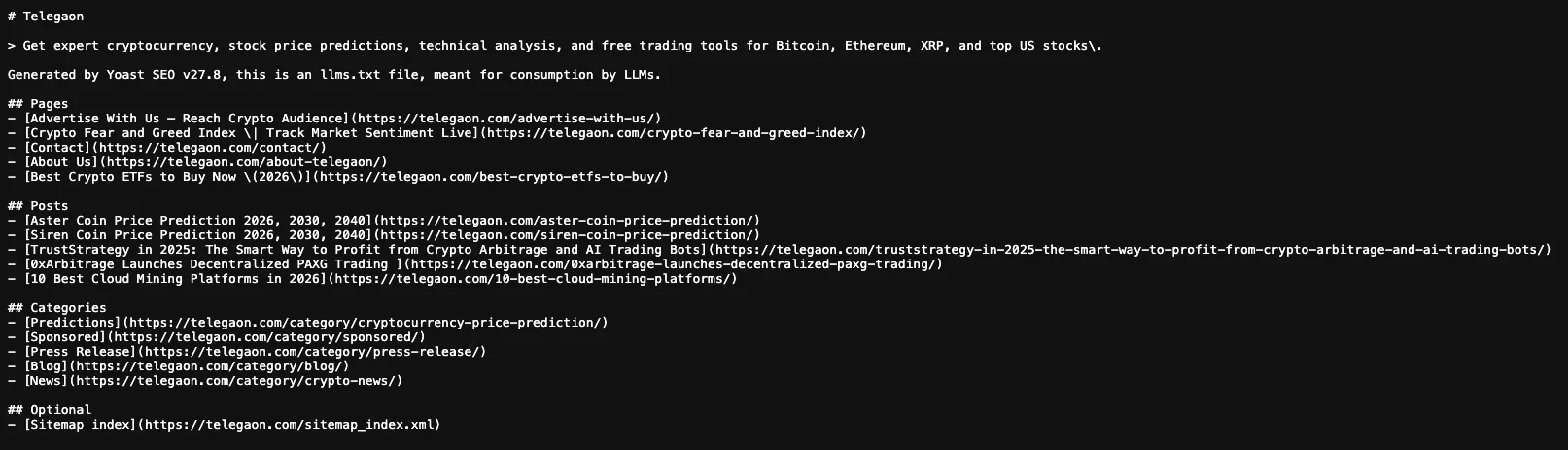
My experiement with llms.txt, which i used on one of my most successful projects, Telegaon (For a clear view, open the image in a new tab)

Website owners are always searching for ways to increase their online presence as the popularity of AI platforms like ChatGPT, Gemini, Claude and Perplexity increases.

The llms.txt file has recently become a trending topic, because it is a proposed standard for large language models (LLMs) to easily recognize important information on a specific website.

However, does having an llms.txt file increase your chances of being included in AI results?

The short answer is No, that it’s not completely clear yet.

According to a study by the SEO firm Ahrefs, 28% of sites publish a valid llms.txt file, but 97% of sites have received zero requests from LLMs or search engines. No bots, no humans, nothing.

I used the llm.txt file in one of my projects (Telegaon), but it didn’t help as much as I expected. Citations from LLMs like ChatGPT are still the same.

While robots.txt has become an industry standard for search engines, llms.txt has not been established as a universal web standard by major AI companies.

Therefore, as of this moment, there is no evidence to suggest that including an llms.txt file will lead ChatGPT or any other LLMs to give your website more citations or have it rank higher in the search results of an AI tool.

The quality of your web content and how well it has been structured will ultimately be the most important factors in determining if your site will be referenced by an AI, or whether an AI will use your site as a resource.

In order to help ensure that your site is referenced by the AI systems, publishing original research, clearly responding to a users’ requests, implementing good technical SEO practices, and showing true expertise will all increase the likelihood that your site will be referenced in the AI’s results. Additionally, building topical authority, utilizing descriptive headings, improving internal linking, and keeping your content fresh and updated are strategies that help your site rank well with search engines as well as AI-based results.

llms.txt does not signify an obsolete file type. If AI crawlers use it as a means to locate preferred content in the future it will suddenly be of great benefit. However, using this file format does not lessen the need for fundamentally good SEO techniques.

The most important aspect of creating visibility through AI searches is producing useful, high-quality content and not seeking shortcuts. AI models are created to find data that are useful, dependable, and properly structured for value.

Long term, creating quality content and having valid technologies will produce greater long-term results than using an untested and experimental file type that is not yet popular.

Posted in Essays | Comments Off on Do llms.txt Files Improve AI Search Visibility?