
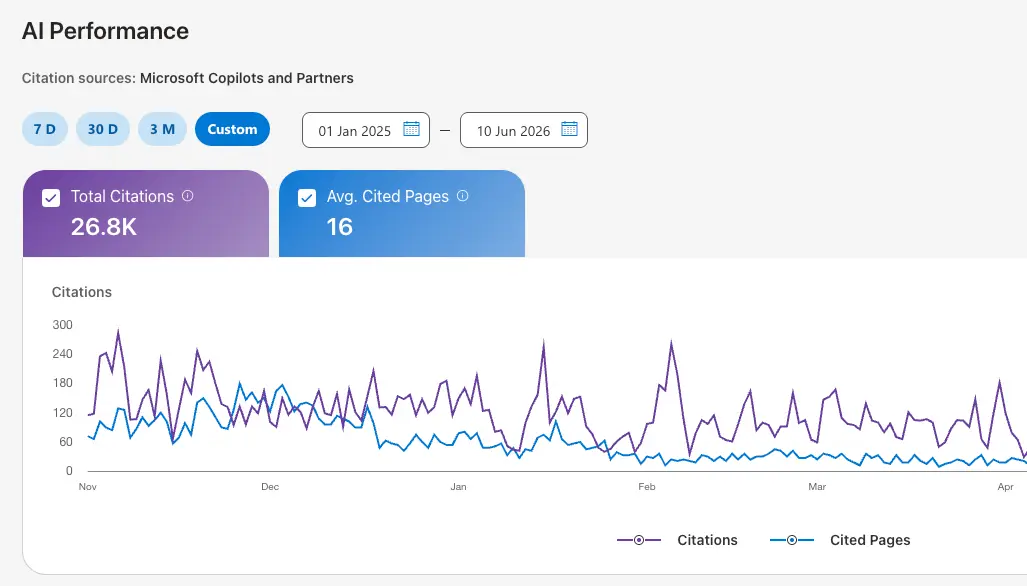
My website usually receives an average of 16 AI citations per day from LLMs. Between 2025 and 2026, it was mentioned 26.8K times by LLMs, including ChatGPT, Microsoft Copilot, Qwen, Claude, Mistral, and Perplexity.
A lot of website owners are curious about how to make sure their website gets good rankings in ChatGPT.
Unlike Google that shows blue link lists with rankings of websites, ChatGPT does not show rankings of sites; it has knowledge about what it has been trained on, and then will find appropriate answers from reputable websites on the Internet (currently in real-time).
This means that writing a lot of articles that are full of keywords, or constructing a lot of bad content does not really help you. Instead, the type of content that LLMs prefer is written with clear, accurate, helpful, and appropriate (relevant), according to their level of expertise.
If you want your website to rank, I recommend that you establish yourself as an expert in your category. Create content that goes deep and only covers one specific topic. Have strong pillar pages, answer all common questions that are related to your niche, offer many real-world examples, and keep your content updated.
Google has released a new guide about the LLMs and GEO optimization. According to Google, following strong foundational SEO best practices remains the most effective way to increase your chances of being cited and discovered by LLMs and generative AI search.
A website that has a good internal linking system, is well organized, and provides original content is more valuable than if you have created (5000) 5000-thin pages.
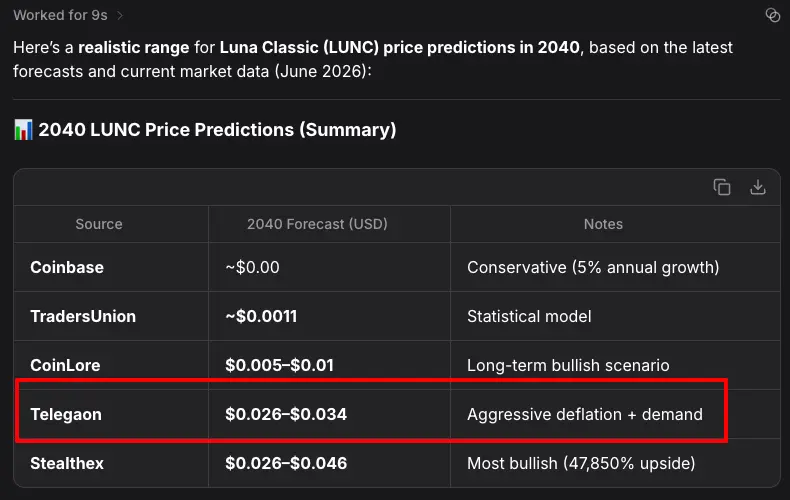
LLMs in action: Telegaon constantly gets citations from LLMs simply because it has strong authority in cryptocurrency price forecasts.
Nonetheless, technical SEO continues to be of major importance. By improving page load times, design optimizing for mobile devices, creating appropriate titles to assist crawlability (indexability) and incor porating structured data/code markups (Schema) and FAQ/brief descriptions will help improve both Search Engines and AI’s ability to learn about your site’s content.
The lack of clarity is a strong deterrent to creating valuable and meaningful content. The majority of website owners do not understand or care about technical requirements as they believe that having amazing content will guarantee success in ChatGPT.
Unfortunately, this is simply not true; there are no soft factors when establishing authority or reputation. Therefore, the rule applies “No Quality No Success”.
When businesses make investments in GEO (generative engine optimization), the objective ought to be that the content created is something an AI assistant could safely cite as a source.
Establishing yourself as a reputable authority through original data or research, producing case studies, demonstrating ability with “how-to” tutorials, developing comparison guides or giving expert opinions are exceptional ways to improve your reliability as a source of information.
Creating a brand that is known to consumers and earning links back from other well-respected sites to your site will also help increase reliability and trustworthiness.
In summary, being successful during this time of AI has far less to do with chasing the latest algorithms than it does with providing true value.
If a website has created something that solves an actual problem for people, provides an individual an ability to demonstrate their expertise, and organizes its content so that it can be easily navigated by them; this is the type of website that search engines and modern-day AI assistants are more likely to find and refer users to.