
In this article, I will explain how to check a website’s citations & traffic from AI. As AI (artificial intelligence)-powered search engines and assistants (like ChatGPT, Google AI Overviews, Gemini, Perplexity and Copilot) become more common, website owners are beginning to ask, “How do I know if my site is receiving traffic or citation from AI?”
Fortunately, many tools are available today to help provide information about your AI visibility.
1. Google Analytics 4 – Check For AI Traffic
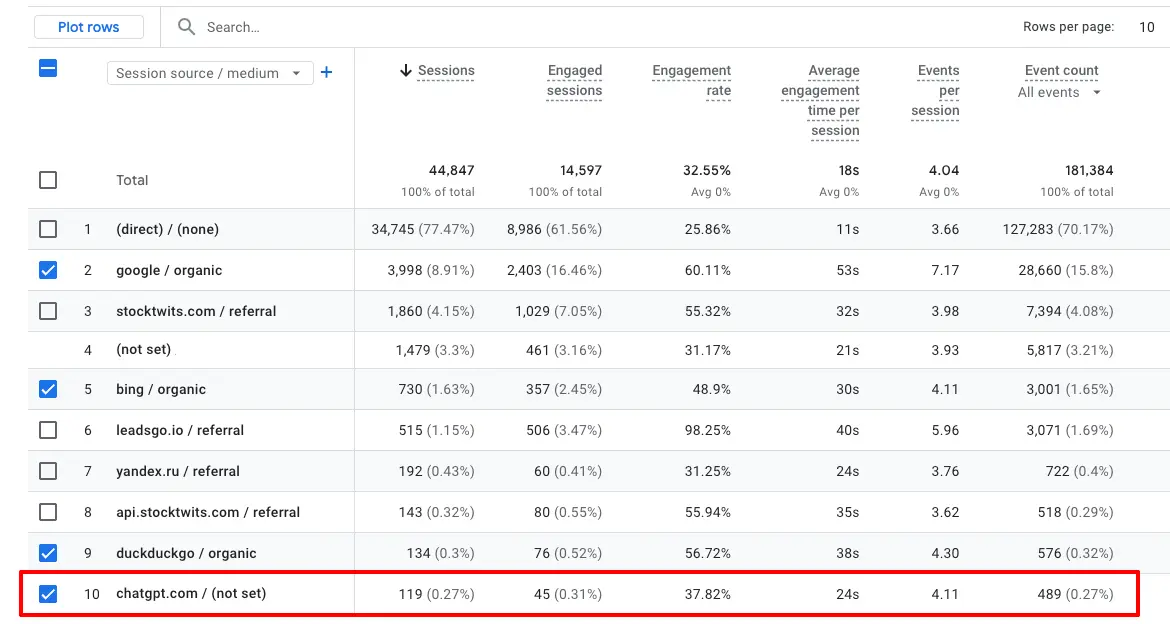
Here’s how you can check your website traffic from LLMs like ChatGPT in Google Analytics GA4.
Google Analytics 4 (GA4) provides one of the simplest ways to measure traffic from AI users.
Follow the steps below to find your AI traffic in GA4:
Go to Reports → Acquisition → Traffic Acquisition.
When looking at your referrers, you can see if there have been any visits from an AI source or AI search experience.
To make it easier to track these visits, create a custom report or filter that includes referrals from the following sources:
ChatGPT, Perplexity, Gemini, Copilot, Claude, and other AI assistant sources
By viewing these referrals over time you will be able to see how much traffic AI sites send to your website and what pages receive the most engagement from these visitors.
2. Bing Webmaster Tools – AI Citations Tracking
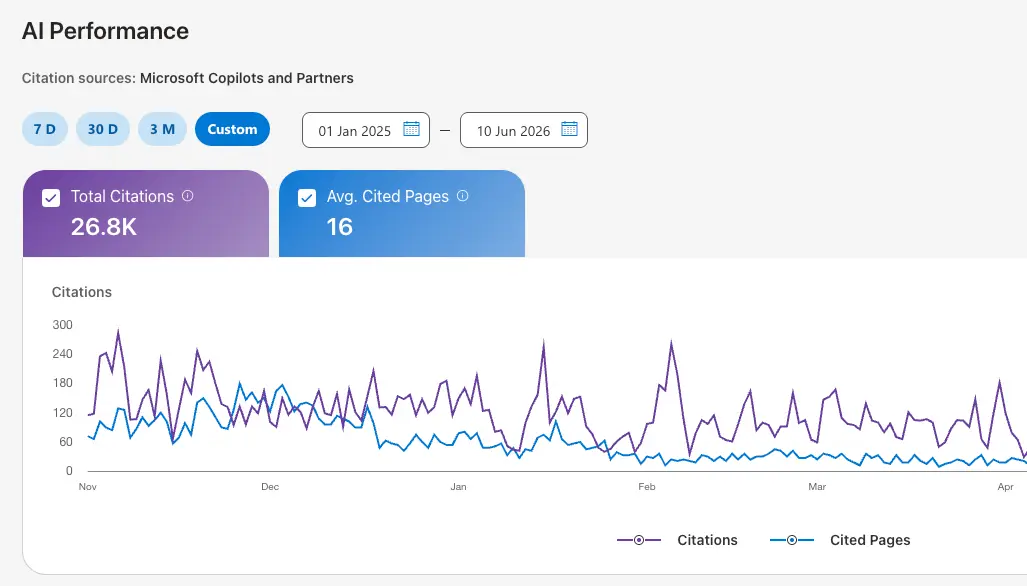
Here’s how you can use Bing Webmaster to track citations from LLMs.
Bing Webmaster Tools is another great option if you are serious about Generative Engine Optimization (GEO).
Reportedly Microsoft has now created a reporting framework which enables webmasters to gain insight into how various forms of content have been surfaced and cited in Bing’s artificially intelligence-driven offerings.
These reports derive value from showing the following data points:
- AI citations
- AI-generated impressions
- Clicks from an AI output
- Content performance in Bing’s generative search engine.
For many content publishers at present, these reports represent clear visibility into a website’s performance in the context of AI reference.
3. Manually Attempt to Reference an LLM
Use various AI tools specific to your niche, and pose questions to them to find whether or not any references to your website exist. A few examples of what you might ask include:
- What is programmatic SEO?
- Where are the best cryptocurrency exchanges located in India?
- What should I do to optimize for geo?
If your content is viewed as authoritative and pertinent, you could have a reference or a link to your own site potentially provided as a direct answer to each of these types of queries.
4. Use Referral Logs and Search Console Reports
By looking at your web server logs and utilizing analytics platforms, it is generally possible to discern how much traffic is being generated from AI-specific crawlers or browsers. At this moment, Google Search Console does not provide separate reports for AI-generated traffic; however, when you combine Google Search Console data with GA4 data, you may be able to determine which individual pages of content are receiving increased traffic due to having been displayed in AI-created results.
5. Create Content That AI Will Prefer to Reference
Tracking is just part two. You will have to focus your efforts on producing great content that:
- Original, backed with research.
- Formatted well (with headings/descriptive)
- Can be scanned quickly by making lists and using tables
- Written by professionals with real-world expertise (everything is “real”)
- Frequent updates to maintain accuracy (i.e., every couple of months or so)
- Can be linked internally to other related resources.
AI systems are going to favor this type of content to answer user questions promptly and provide them with an authoritative resource vs. content that has been written exclusively for keyword targeting.
Final Thoughts
AI is changing the way you expose yourself and drive traffic to your brand. At present, no one site has a listing of every AI platform mention of yours. But combining Google’s analytics (GA4) with Bing’s Webmaster Tools offers you the best way of monitoring your site performance regarding AI search today.
As the way consumers use search engines continues to evolve, website owners will need to track: Rankings, Clicks, AI Referrals, AI Citations; and, AI Engagement (using the previous tools already specified) as soon as possible. The future of SEO is no longer based on ranking in traditional search engines; it is now going to be focused on becoming a trusted resource that AI will refer others to with confidence.